The Partial Eclipse: A Beautiful Trap
Why partial solar eclipses are the most dangerous phase for eye injury: illusion of safety, solar retinopathy, ISO 12312-2 glasses, supervision, and optical…
A seductive danger
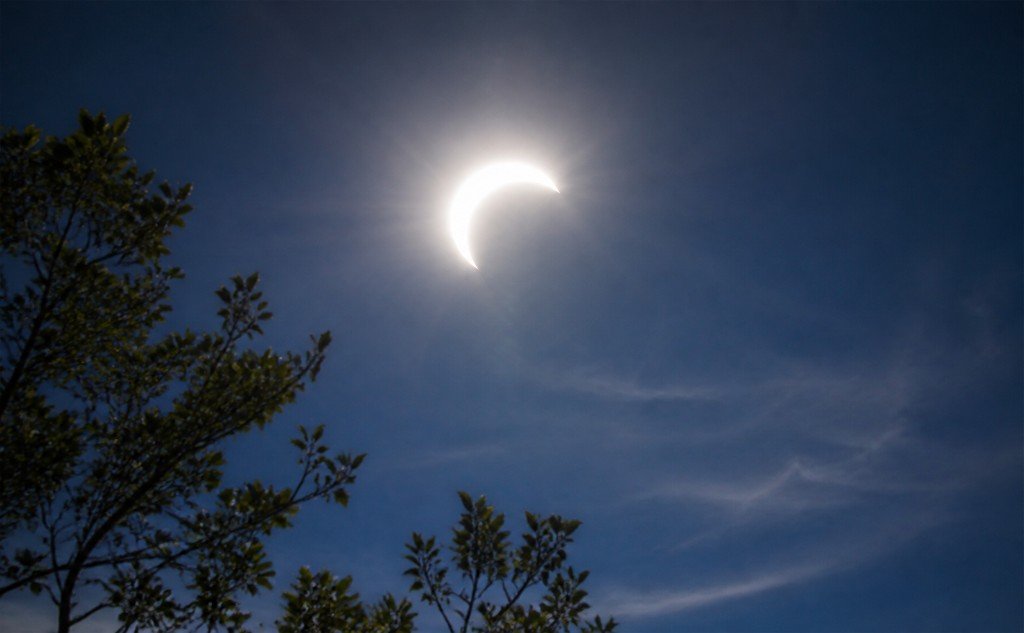
A partial solar eclipse is one of nature's most seductive dangers. It presents itself as a gentle dimming of the day, a curious notch taken out of the Sun, a phenomenon that feels safe enough to observe with a squint or a quick glance. Unlike the dramatic, world-transforming spectacle of totality, a partial eclipse lacks the sudden onset of night that commands respect. Instead, it offers a slow, creeping change that invites casual observation. This is precisely what makes it so hazardous.
The partial phases of an eclipse are the most dangerous moments for eye injury, and the demographic most at risk is not the seasoned astronomer with a telescope and a solar filter, but the curious child who does not understand that the Sun is not a toy. For phase-by-phase rules and product guidance, see Safe Viewing and Herding Cats .
The illusion of safety
The fundamental problem with a partial eclipse is that the Sun remains overwhelmingly bright throughout the entire event. Even when 90% of the solar disk is covered by the Moon, the remaining 10% sliver is still intensely luminous. In fact, the remaining crescent is so bright that it can cause retinal damage in seconds. The human eye has a natural defence mechanism: the aversion reflex. When we look at something too bright, we instinctively look away or squint. Pain and discomfort signal us to stop. However, during a partial eclipse, the overall ambient light is reduced enough that the Sun seems less threatening. The sky is a strange, metallic grey, shadows are sharp and eerie, and the temperature may drop slightly. This atmospheric change lowers our psychological guard.
For children, this effect is amplified. A child's curiosity is boundless, and their understanding of risk is often abstract. To a child, the eclipse is a magic trick, a celestial game. They see adults looking up, pointing, and exclaiming in wonder. They want to participate. But without proper education and supervision, that participation can lead to irreversible harm. The retina, the light-sensitive tissue at the back of the eye, has no pain receptors. This means that solar retinopathy — the burning of the retina by concentrated solar radiation — occurs without any sensation of pain. A child can stare at the Sun through an unsafe filter, or without any filter at all, and feel nothing. By the time symptoms appear — blurred vision, a central blind spot, distorted colour perception — the damage is done. And in many cases, it is permanent.
The mechanics of injury
Solar retinopathy is not a superficial burn like a sunburn on the skin. It is a photochemical and thermal injury to the photoreceptor cells in the macula, the part of the retina responsible for sharp, central vision. When sunlight enters the eye, the lens focuses it onto the macula, concentrating the energy by a factor of about 100,000. During a partial eclipse, the pupil may dilate slightly due to the reduced ambient light, allowing even more radiation to enter. The result is a burn that can destroy the very cells needed to see the eclipse itself.
Children are particularly vulnerable for several reasons. Their lenses are clearer than those of adults, allowing more ultraviolet and infrared radiation to reach the retina. They are also less likely to comply with safety instructions over an extended period. A child may start with proper eclipse glasses, but after a few minutes of boredom, they may peel them off, peek over the top, or look through a gap in the cardboard. They may trade glasses with a friend, not realising that scratched or damaged filters are unsafe. They may try to look through a camera viewfinder, a telescope, or binoculars, not understanding that these devices concentrate sunlight to levels that can cause instant, catastrophic injury. See Eye Protection for filter standards and inspection.
The failure of improvised solutions
Because of the nature and seriousness of this hazard, we do not discuss or illustrate particular improvised viewing approaches. Anything not certified for direct solar viewing is unsafe — and guessing is not worth the risk to your eyesight.
One of the most common dangers during a partial eclipse is the use of inadequate or improvised filters. Parents and children alike may believe that ordinary dark lenses or homemade materials are sufficient protection. They are not. Everyday eyewear is designed to reduce glare and improve comfort, not to block the intense radiation of the Sun. It may reduce visible light substantially, but that is nowhere near the reduction required for safe solar viewing. More critically, it does not block ultraviolet and infrared radiation effectively. Looking at the Sun through uncertified filters is like wearing a tinted visor while staring into a welding arc: the visible light is dimmed, but the harmful wavelengths still burn through.
Improvised filters are equally dangerous: unpredictable materials, uneven transmission, and no guarantee that harmful wavelengths are blocked. The only safe option is eyewear that meets the international safety standard ISO 12312-2. These filters are specifically designed to block the full spectrum of solar radiation to safe levels. Anything less is a gamble with permanent vision.
The role of supervision
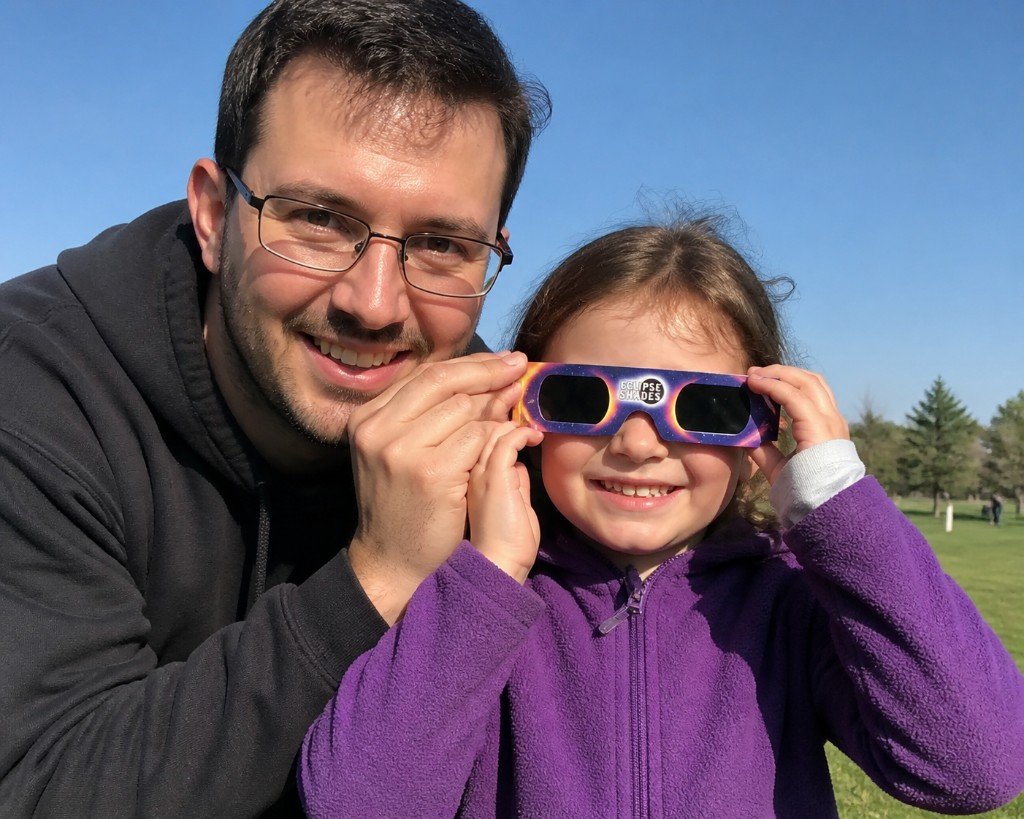
The single most important factor in preventing eye injury during a partial eclipse is active, engaged supervision. This is not a situation where parents can hand out eclipse glasses and step back to take photos. Children must be monitored continuously. They should be instructed to keep their glasses on at all times during the partial phases, to look away from the Sun when adjusting equipment, and to never look through optical devices without proper solar filters.
Supervision also means education. Before the eclipse begins, parents and teachers should explain the risks in age-appropriate terms. A child who understands that the Sun can hurt their eyes, even if it does not feel painful, is more likely to comply with safety rules. Demonstrations can help: show how a magnifying glass can burn paper, and explain that the eye works in a similar way. Emphasise that the eclipse glasses are not optional; they are as essential as a seatbelt in a car.
The danger of optical devices
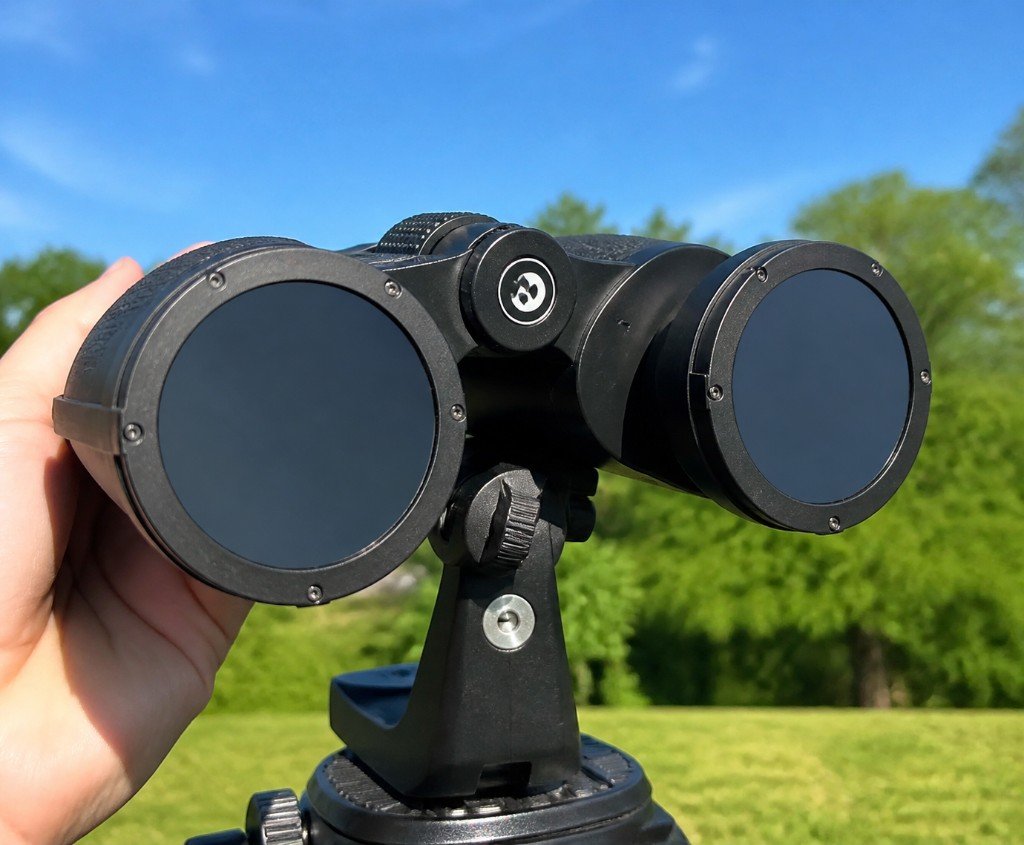
Cameras, telescopes, and binoculars introduce a separate layer of risk. These devices gather and concentrate sunlight, increasing its intensity to levels that can cause immediate injury. Looking at the Sun through an unfiltered telescope or binoculars is akin to staring into a laser beam. The damage can occur in a fraction of a second, faster than the blink reflex. For children, the risk is compounded by the temptation to look through the eyepiece out of curiosity.
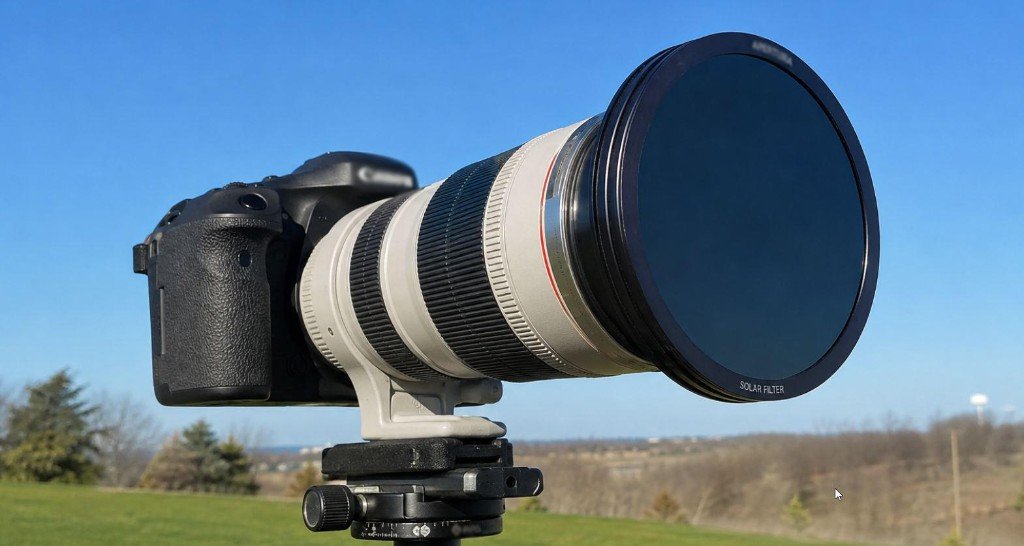
Parents must ensure that any optical device used for eclipse viewing is equipped with a proper solar filter mounted on the front aperture, not the eyepiece. Eyepiece filters can shatter from the concentrated heat, causing instant blindness. If a child is to use a telescope or binoculars, an adult should supervise the activity closely, ensuring that the filter remains in place and that the child does not remove their eclipse glasses when looking away from the device. Photographers should read Eclipse Photography for filter placement on cameras and lenses.
Front-mounted solar filters may be removed only during the brief moments of totality. At all other times — whenever the Sun, or any portion of it, is visible — filters must remain in place on every optical device pointed at the sky.
The partial phase mindset
The partial eclipse demands a different mindset from totality. During totality, there is a brief window — when the Sun is completely covered — when it is safe to look without protection. This moment is dramatic and unmistakable: the sky goes dark, the corona appears, and the world holds its breath. But during the partial phases, there is no such window. The Sun is never safe to view directly. This distinction is critical, and it is one that children may struggle to grasp. They may hear that it is safe to look during the eclipse and assume that applies to the entire event.
Clear communication is essential. Parents should explain that the “safe” moment is only during totality, and only for those in the path of totality. For those observing a partial eclipse, there is no safe moment without protection. The glasses must stay on from the first glimpse of the Moon touching the Sun until the eclipse is completely over. Timing cues for totality observers are covered in Baileys Beads & Diamond Ring .
A partial solar eclipse is a wonder, but it is a wonder that demands respect. The dangers are real, silent, and potentially permanent. For children, the risks are heightened by their natural curiosity, their clearer lenses, and their tendency to test boundaries. The responsibility falls on adults to provide the right equipment, the right education, and the right supervision. Eclipse glasses must be ISO-certified and undamaged. Improvised filters must be rejected. Optical devices must be properly filtered. And above all, children must be watched, instructed, and reminded that the beauty of the eclipse is not worth the cost of their vision.
When the Moon begins its slow journey across the Sun, the priority is not the perfect photograph or the best viewing spot. It is the safety of every pair of eyes looking up in wonder.